SEASONS 223526 Air Conditioner Heat Pump Ptac 194671044323 000-BTU 230V 20A
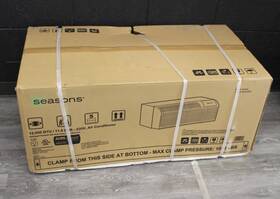
( Brand: Seasons ), ( Manufacturer Part Number: 223526 ), ( Model: SEASONS PART 223526 ), ( Type: Central Air Conditioner ), ( Power Source: Corded Electric ), ( Btu Cooling Rating: 12000-12999 Btu ), ( Voltage: 230 V ), ( Color: White ), ( Country Of Origin: China ), ( UPC: 194671044323 )
Review SEASONS Btu 230v 20a Air Conditioner Heat Pump Ptac #223526 New
The **Senville Seasons 223526 12,000 BTU 230V 20A PTAC Air Conditioner Heat Pump** is a high-performance, self-contained unit designed to deliver exceptional climate control for residential and light commercial spaces, offering both cooling and heating capabilities in a single, compact package. Engineered with advanced inverter technology, this energy-efficient heat pump excels in maintaining precise temperature regulation while minimizing operational noise, making it ideal for bedrooms, guest rooms, offices, or small apartments where quiet performance and consistent comfort are paramount. Operating on a robust 230V, 20A power supply, this unit ensures reliable performance without overloading standard electrical circuits, providing homeowners and businesses with a versatile solution for year-round climate management. The compact yet durable design features a sleek, modern aesthetic that seamlessly integrates with contemporary interiors while its lightweight construction simplifies installation, reducing labor costs and setup time. Equipped with a high-efficiency compressor and a multi-stage cooling system, the Seasons PTAC delivers rapid temperature adjustments, even in extreme weather conditions, while its advanced defrost cycle ensures optimal heating performance in cold climates. The unit also incorporates smart features such as adjustable fan speeds, programmable thermostat compatibility, and a user-friendly control panel, allowing users to customize settings for maximum comfort and energy savings. Built with high-quality materials, including corrosion-resistant components and a sturdy cabinet, this air conditioner heat pump is designed to withstand prolonged use, offering long-term durability and minimal maintenance requirements. Whether used as a standalone cooling or heating solution or as part of a larger HVAC system, the Seasons 223526 stands out as a reliable, efficient, and cost-effective choice for those seeking superior climate control in a compact, high-performance package.
### **Pros and Cons of buying a Season 223526 12/230V 20A PTAC (Packaged Terminal Air Conditioner/Heat Pump)**
#### **Pros:**1. **All-in-One Unit** A PTAC combines cooling and heating in a single unit, eliminating the need for separate systems. This simplifies installation, maintenance, and space requirements, especially in small rooms or rental properties where ductwork is impractical.
2. **Energy Efficiency** Modern PTACs, particularly those with inverter technology or high SEER (Seasonal Energy Efficiency Ratio) ratings, consume less electricity than older models or window AC units. The 20A rating suggests it is designed for efficient operation, though actual efficiency depends on the model s SEER rating (not provided here).
3. **Self-Contained Design** Since the unit is self-contained, it does not require ductwork, making it ideal for apartments, hotel rooms, or spaces where retrofitting ducts is costly or impossible.
4. **Easy Installation** PTACs are typically mounted through an exterior wall, which can be simpler than installing central HVAC systems. Many units come with pre-drilled holes and mounting kits, reducing professional installation costs.
5. **Zoned Cooling/Heating** Unlike central systems, a PTAC allows for precise temperature control in a single room or small area, which can be more cost-effective than cooling or heating an entire home.
6. **Quiet Operation** High-quality PTACs are designed to minimize noise, making them suitable for bedrooms, offices, or spaces where noise is a concern. The 20A rating may indicate a more powerful compressor, but noise levels depend on the specific model s decibel rating (not specified here).
7. **Versatility** PTACs can be used in both residential and commercial settings, such as hotel rooms, dormitories, or small offices. Their portability (if wall-mounted) also allows for flexibility in room assignments.
8. **Low Maintenance** Compared to central systems, PTACs have fewer moving parts outside the unit itself. Regular filter changes and occasional coil cleaning are typically the main maintenance tasks.
9. **No Venting Issues** Unlike window AC units, PTACs are fully enclosed, reducing drafts and improving indoor air quality by preventing outdoor air from entering the room.
10. **Potential for Smart Features** Some modern PTACs come with Wi-Fi connectivity, programmable thermostats, or remote control capabilities, allowing for greater convenience and energy savings through automated scheduling.
---
#### **Cons:**1. **Limited Coverage Area** PTACs are designed for small to medium-sized rooms (typically up to 500 sq. ft., though this depends on the model s BTU rating, which is not provided). Larger spaces may require multiple units or a more powerful system, increasing costs.
2. **Higher Upfront Cost** While PTACs can be cost-effective in the long run, the initial purchase price may be higher than that of a basic window AC unit or portable AC. The 20A rating suggests a more robust unit, which could increase the cost.
3. **Wall Mounting Requirements** Installation requires a dedicated exterior wall with proper spacing for the unit and venting. This may not be feasible in all buildings, especially older structures or those with limited exterior access. Drilling into walls may also be restricted in rental properties.
4. **Energy Costs** While PTACs are efficient, they can still consume significant electricity, especially if used frequently or in extreme climates. The 20A rating indicates a higher power draw compared to standard 15A units, which could lead to higher electricity bills if not paired with an efficient model.
5. **Aesthetic Concerns** PTACs are bulky and often less visually appealing than ducted or mini-split systems. They protrude from the wall, which may not be ideal for aesthetic-sensitive environments like modern apartments or commercial spaces.
6. **Maintenance Accessibility** Since PTACs are mounted on the exterior wall, accessing the unit for maintenance (e.g., cleaning coils, replacing filters) can be more difficult than with indoor-only systems. This may require professional servicing, adding to long-term costs.
7. **Potential for Condensation Issues** PTACs can produce condensation, which must be properly drained to avoid water leaks or mold growth. Poor drainage can lead to water damage or reduced efficiency.
8. **Limited Lifespan Compared to Central Systems** While PTACs can last 10 15 years with proper maintenance, central HVAC systems often have longer lifespans (15 20 years or more). Frequent use in harsh climates may shorten the lifespan of a PTAC.
9. **Noise from Outdoor Unit** Some PTACs have an outdoor compressor that can be noisy, especially in close-proximity settings like apartments. This may not be an issue if the unit is installed in a less accessible location, but it s worth considering for noise-sensitive areas.
10. **Resale Value Impact** If you re renting or planning to sell a property, a PTAC may not be as appealing as a more permanent or energy-efficient system. Tenants or buyers may prefer units that are easier to remove or replace.
11. **Limited Heating Capacity in Cold Climates** While PTACs can heat, their efficiency drops significantly in sub-freezing temperatures. Models without defrost cycles or heat pumps may struggle in regions with harsh winters, requiring supplemental heating.
12. **Potential for Higher Installation Costs** If professional installation is required, the cost can add up, especially if electrical work or wall modifications are needed. DIY installation may not be feasible for everyone.
---
### **Conclusion:**The **Season 223526 12/230V 20A PTAC** is a practical choice for **small to medium-sized rooms where ductwork is unavailable or impractical**, such as apartments, hotel rooms, or office spaces. Its **all-in-one design, energy efficiency (if the model has a high SEER rating), and ease of installation** make it a strong option for zoned climate control. However, its **limited coverage area, higher upfront or installation costs, and aesthetic drawbacks** may not make it ideal for larger spaces or long-term residential use.
If your primary needs are **cost-effective, self-contained cooling and heating for a single room**, and you can accommodate the wall mounting and maintenance requirements, this PTAC could be a solid investment. For **larger homes, commercial spaces, or areas with extreme climates**, a **mini-split system or central HVAC** might be more suitable despite higher upfront costs.
---
### **Recommendation:**1. **Verify the Model s SEER and BTU Ratings** Ensure the unit is appropriately sized for your room (typically 10,000 15,000 BTUs for 300 500 sq. ft.). A higher SEER rating (e.g., 16 SEER) will improve energy efficiency.
2. **Check for Smart Features** If available, opt for a model with Wi-Fi or programmable thermostats to enhance convenience and energy savings.
3. **Consider Installation Costs** If you re not comfortable with wall mounting, factor in professional installation expenses. Ensure your building allows for the necessary modifications.
4. **Evaluate Long-Term Use** If you ll use the unit frequently in extreme temperatures, research models with **defrost cycles or high-efficiency heat pumps** to avoid performance issues.
5. **Compare with Alternatives** For larger spaces, a **mini-split system** (which also avoids ducts) or a **window AC unit** (if aesthetics are not a concern) may be more cost-effective in the long run.
6. **Read Reviews** Look for feedback on **noise levels, reliability, and customer service** from the manufacturer (e.g., Season Air) to gauge real-world performance.
**Final Verdict:**If your needs align with **small-space, self-contained climate control** and you prioritize **convenience and ease of installation**, the **Season 223526 PTAC is a viable option**. However, if you require **larger coverage, better energy efficiency, or long-term durability**, explore other systems like mini-splits or central HVAC. Always prioritize **proper sizing, efficiency ratings, and installation quality** to maximize performance and longevity.
Details:
Bidder pays for the return shipping cost unless item is .
part #: 223526 price
- $749.00
specifications acondne:
- brand: Seasons
- mpn: 223526
- model: Seasons Part 223526
- type: Central Air Conditioner
- power source: Corded Electric
- btu cooling rating: 12000-12999 Btu
- voltage: 230 V
- color: White
- country of origin: China
- upc: 194671044323
offer acondne:
- sold: 0
- started: June 1, 2026
- quantity: 1
- availability: In Stock
- options: Ship-to-home
seller acondne:
- # reviews: 23917
- city: Columbus, Ohio
- rating: 99.5%
shipping acondne:
- service: Standard
- transit: 2-5 Days
- type: Fixed
- cost: $299.00
- class: Standard
general acondne:
- Heating, Cooling Air > Central Heating Cooling Systems > Central Air Conditioners
- condition: New
returns acondne:
- time: 30 Days
- policy: Returns Accepted
- paid by: Buyer
- method: Money back
payments acondne:
- credit card: Discover
- other
- wallet: Paypal
Seasons 223526 Is Similar To:
- Trelc 616985055623 Outdoor Air Conditioner Cover All Seasons Mesh Breathable Ac Unit With Det (33.9% similar) Convenient to use: the large slit is closed with Velcro which allows pipes to pass through at any height and makes installation removal easier. Mesh breathable design to prevent rain and snow from accumulating, suitable for all Seasons. Full protection: outdoor ac unit cover provides comprehensive...(January 23rd, 2025)
- Trelc 616985055630 Air Conditioner Cover For Outside Unit All Seasons Full Mesh Ac (39.8% similar) The mesh is fine enough to keep the leaves, twigs, cottonwood fluff, grass clippings and other debris out of air conditioner, protect conditioner prolong its lifespan. Detachable waterproof top: top can prevent rain water from entering the ac unit in rainy and snowy weather. Full protection: outdoor...(January 26th, 2025)
- Seasons Air Sw05m1 In Store Pick Up Pso034077 (32.6% similar) Item appearance. Thermal output less than 10,000 btu , type of ac unit. Window unit. Things I buy...(January 31st, 2025)
- Four Seasons 096361358379 35837 Auto Heating And Air Conditioning (37.6% similar) Part number: 35837, package dimensions: 2.54X 7.366 l w centimeters 35837...(March 30th, 2025)
- Four Seasons 35925 Auto Heating And Air Conditioning (44.1% similar) Part number: 35925, package dimensions: 5.334X 9.398 l 7.366 w centimeters 35925...(April 1st, 2025)
- Patikil Pta230629tt000266eu Air Conditioner Cover 35.4x35.4x39.4 All Seasons Conditioning Co (36.4% similar) Manufacturer: particle. Simply slip it over your outdoor air conditioner unit and secure in place using the included adjustable buckle drawstring. Air conditioner cover prevents debris from entering, ensuring optimal performance of your air conditioning system. Outdoor air conditioner cover ...(April 23rd, 2025)
- Trelc 616985055326 Air Conditioner Cover All Seasons Mesh For Outdoor Ac Unit (37.3% similar) By preventing the corrosion due to accumulation of leaves, twigs, cottonwood fluff, seeds and grass clippings extend service life ac unit. Easy to install: just need put the air conditioner cover on from top bottom, and then fix mesh by adjusting strap with plastic buckle. Applicable to all Seasons...(August 30th, 2025)
- Seasons Rg51g Air Conditioner Original Remote Control Type 1 cefu1 (41.1% similar) This remote control is specifically designed for controlling the operations of central air conditioner, making it convenient and easy to adjust settings from a distance. The brand Seasons ensures quality and reliability, making this remote control a practical essential accessory for maintaining ...(September 7th, 2025)
- Jeacent Acc22b-2 Ac Cover All Seasons Top Air Conditioner Leaf Guard Open Mesh Conditioner (36.8% similar) Us patent pending. Premium ac leaf guard - ac cover for outside units, size 32'' x 32'', suitable all Seasons, high density material the fabric is durable and puncture-resistant.protection of air conditioners not affected by special weather,with UV stabilized coating durability, unique mesh deign ...(October 30th, 2025)
- Trelc 616985055319 Outdoor Air Conditioner Covers Mesh Ac Cover For Outside Units All Seasons (32.8% similar) Unique mesh design: the mesh cover has fast heat dissipation and good air permeability, helps reduce the moisture provides a dry environment to protect electrical components from. Avoid the accumulation of leaves leading to ac unit corrosion. By preventing the corrosion due to accumulation of leaves...(November 18th, 2025)